
TLDR
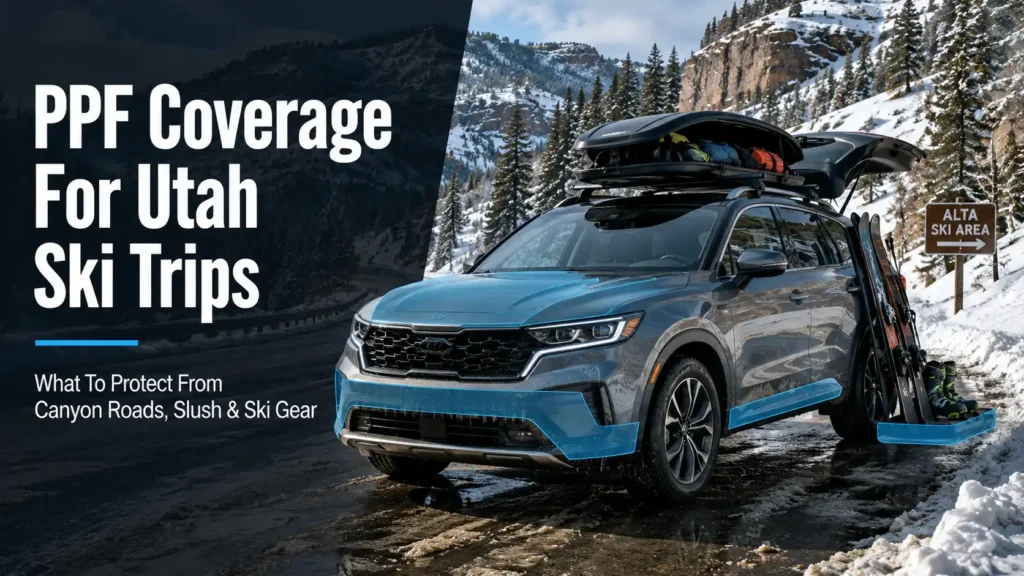
If you regularly drive to Utah ski resorts, the most useful PPF coverage usually starts with full front protection, then adds lower panels, rocker panels, door sills, and rear cargo-area protection based on how you use the vehicle.
For many ski-trip vehicles, the best setup is not automatically “full body PPF.” It is targeted coverage for the areas that take the most abuse from canyon roads, winter road treatment, slush, gravel, skis, boots, poles, bags, and repeated loading.
A daily commuter that skis twice a year may only need front-end coverage. A truck, SUV, EV, or family vehicle that heads into the canyons every weekend may benefit from a more complete high-impact package.
The Real Question Is Not Just “Do I Need PPF?”
Utah ski trips are hard on vehicles in a very specific way. You are not just dealing with ordinary freeway rock chips. You are dealing with wet winter roads, canyon traffic, road treatment, gravel, snowmelt, crowded parking lots, ski gear, boots, roof racks, cargo loading, and repeated exposure during the months when vehicles are already dirtiest.
That is why the better question is: what PPF coverage do you need for Utah ski trips?
The answer depends on your vehicle, how often you ski, where you drive, and how much of the vehicle you want to preserve. A small sedan going up the canyon once or twice a season does not need the same coverage as a new 4Runner, Rivian, Bronco, Outback, Tesla, or truck that makes weekly winter resort runs.
Why Utah Ski Driving Is Different
Ski driving creates a mix of impact zones and wear zones.
Impact zones are the areas that take physical hits from rocks, grit, slush, and road debris. Wear zones are the areas that get scratched, scuffed, or rubbed from normal use: loading skis, brushing against the rear bumper, dragging bags over the cargo edge, stepping over door sills, or setting gear against painted panels.
Most PPF conversations focus on rock chips. For Utah ski vehicles, that is only part of the story.
A ski-trip vehicle may deal with:
- Road spray from canyon traffic
- Gravel and winter grit kicked up by tires
- Salt brine and road-treatment residue
- Tight resort parking lots
- Skis and poles near painted panels
- Snowboards resting against the vehicle
- Boots scuffing door sills
- Rear bumper scratches from loading gear
- Roof box or rack contact points
- Dirty snow and slush collecting around lower panels
That does not mean every square inch needs film. It means the coverage should match the actual abuse pattern.
Start With Full Front PPF
For most Utah ski-trip vehicles, full front PPF is the best starting point.
A typical full front package may include:
- Front bumper
- Full hood
- Front fenders
- Side mirrors
This coverage matters because winter canyon driving often means following other vehicles, sitting in traffic, and driving through dirty road spray. The front bumper and hood are the obvious targets. Side mirrors and fenders also take repeated exposure from debris and winter grime.
A partial front package can still help, but the visible film line across the hood may bother some owners, and it leaves more painted surface exposed. If the vehicle is newer, higher-value, dark-colored, matte, or something you plan to keep clean long term, full front usually makes more sense than partial front.
The tradeoff is cost. Full front coverage costs more than partial coverage, but it protects a more complete impact zone and usually looks cleaner because the film edges are placed at natural panel edges instead of across the hood.
Add Rocker Panels And Lower Doors For Regular Canyon Driving
Full front PPF protects the front-facing surfaces. But ski traffic also beats up the lower sides of the vehicle.
If you regularly drive through Big Cottonwood Canyon, Little Cottonwood Canyon, Parley’s Canyon, Provo Canyon, or other winter mountain routes, lower-side protection becomes more important.
Consider adding PPF to:
- Rocker panels
- Lower doors
- Areas behind the front wheels
- Lower rear door areas
- Lower quarter panels
- Rear dogleg areas
This is especially useful if you drive a truck, SUV, crossover, or vehicle with wider tires. The tires can throw grit and slush backward along the vehicle’s lower panels. You may not notice the damage from ten feet away at first, but over time those panels can start to look peppered or sandblasted.
This is also where mud flaps can help. But mud flaps reduce spray; they do not protect the painted surface directly. For many winter-use vehicles, mud flaps and lower-panel PPF work well together.
Protect The Rear Bumper Loading Area
Ski gear is not gentle. Neither are snowboards, boots, bags, coolers, helmets, strollers, sleds, and roof-box cargo.
The rear bumper loading ledge is one of the most overlooked PPF areas for ski families and outdoor vehicles. It is not usually the first panel people think about, but it takes repeated contact from gear being lifted in and out of the cargo area.
Rear bumper ledge PPF is useful if you load:
- Skis
- Snowboards
- Ski bags
- Boot bags
- Coolers
- Sleds
- Strollers
- Dog crates
- Tool bags
- Camping or cabin gear
This area does not need a dramatic explanation. People scratch it because life happens. A clear strip of film can keep normal cargo loading from turning into permanent paint damage.
Add Door Sill And Door Cup Protection For Family Ski Vehicles
If your ski trips include kids, friends, passengers, boots, and parking-lot chaos, door sill and door cup protection can be worth adding.
Door sills get scuffed by boots and shoes. Door cups get scratched by fingernails, gloves, rings, and keys. These are small areas, but they age quickly on vehicles that get used hard in winter.
Useful add-ons include:
- Door sill PPF
- Door cup PPF
- Door edge PPF
- Rear hatch handle-area protection
This is not about major rock-chip defense. It is about preventing annoying, avoidable wear in the exact spots people touch every time they get in and out.
Should You Protect The Roof Or Pillars?
Usually, roof PPF is not a first priority for ski trips. But there are exceptions.
Consider roof-edge or pillar protection if:
- You use roof racks often
- You load skis into a roof box frequently
- You rest skis or poles against the roofline
- You have a low garage and handle roof gear carefully but often
- You own a vehicle with painted roof rails or glossy black trim near rack contact points
For most drivers, this is a targeted add-on, not a standard ski package. If the vehicle has a roof box that stays on all winter and the same painted areas get touched repeatedly, it may be worth discussing.
What About Full Body PPF?
Full body PPF is the most complete option, but it is not the default answer for every ski vehicle.
It makes the most sense for:
- High-value vehicles
- Matte paint
- Specialty paint
- Luxury SUVs
- Performance EVs
- Vehicles kept long term
- Owners who want the cleanest long-term paint preservation
- Vehicles that see frequent canyon, gravel, and winter driving
Full body PPF protects far more than the obvious impact areas, but it also costs significantly more than targeted coverage. For many Utah drivers, the more balanced choice is full front PPF plus ski-trip add-ons: lower panels, rocker panels, rear bumper ledge, door sills, and door cups.
That package covers the areas most likely to get damaged without turning every vehicle into a full-body project.
A Practical Ski-Trip Coverage Guide
Here is a simple way to choose.
Occasional Ski Driver
You ski a few times each winter, mostly on paved roads, and your vehicle is a normal daily driver.
Consider:
- Partial front or full front PPF
- Side mirrors
- Rear bumper loading ledge if you carry gear inside
This is a practical entry point. You do not need to overbuild the package if your exposure is limited.
Regular Weekend Ski Driver
You drive canyon roads often, park at resorts, and load gear throughout the season.
Consider:
- Full front PPF
- Rocker panels
- Lower doors
- Rear bumper loading ledge
- Door sills
- Door cups
This is probably the most sensible package for many Utah ski families and daily drivers.
Truck, SUV, Or Outdoor Vehicle
You drive a higher-clearance vehicle, use gravel access roads, visit cabins, use all-terrain tires, or ski and camp throughout the year.
Consider:
- Full front PPF
- Rocker panels and lower doors
- Lower rear quarter panels
- Fender flare edges if painted
- Door sills
- Rear bumper loading ledge
- Rear hatch handle area
This is where targeted high-impact coverage can make a big difference.
High-Value Or Matte Vehicle
You have a vehicle where paint repair would be expensive, difficult, or especially noticeable.
Consider:
- Full front PPF at minimum
- Full high-impact package
- Full body PPF if long-term preservation matters
- Matte-specific film if the vehicle has matte paint or a frozen/satin finish
Matte paint is a special case because repairs can be harder to blend cleanly. If you own a matte or satin-finish vehicle, PPF should be considered earlier, not after the damage appears.
Areas PPF Does Not Protect
PPF is useful, but it has limits.
PPF does not replace:
- Snow tires
- Chains or snow socks
- Safe following distance
- Windshield protection
- Undercarriage washing
- Regular vehicle cleaning
- Careful gear loading
- Good winter driving judgment
It also does not make paint damage impossible. A hard enough rock, sharp metal edge, careless ski pole, or heavy scrape can damage film or paint. Good PPF reduces risk. It does not suspend physics, unfortunately.
What To Do Before Installing PPF On A Ski Vehicle
Before installing PPF, inspect the vehicle honestly.
Check for:
- Existing rock chips
- Scratches near the rear bumper
- Door sill scuffs
- Lower door damage
- Road tar
- Salt residue
- Previous touch-up paint
- Repainted panels
- Matte or satin paint requirements
- Loose trim or aftermarket accessories
If the vehicle is new, install protection early. If the vehicle is used, film can still help, but existing damage may need to be cleaned up, touched up, or discussed before installation.
Photos help, but an in-person look is often better for ski vehicles because lower-panel damage and cargo-area scuffs can be easy to miss.
The Best PPF Setup For Utah Ski Trips
For most regular Utah ski drivers, the best starting recommendation is:
- Full front PPF
- Rocker panels
- Lower doors
- Rear bumper loading ledge
- Door sills
- Door cups
That combination protects the major road-impact areas and the most common gear-related wear areas. It is more practical than only protecting the hood and bumper, but less extreme than jumping straight to full body PPF.
The final answer should still be vehicle-specific. A low Tesla, a family Subaru, a lifted Tacoma, a 4Runner, a Rivian, and a luxury SUV all have different shapes, tire positions, loading habits, and paint concerns.
The best question to ask is simple: where does your ski driving actually touch the vehicle?
That is where the coverage should start.
FAQs
What PPF Coverage Do I Need For Utah Ski Trips?
Most regular ski drivers should consider full front PPF, rocker panels, lower doors, rear bumper loading ledge, door sills, and door cups. Occasional ski drivers may only need front-end protection and a rear bumper loading strip.
Is Full Front PPF Enough For Ski Driving?
Full front PPF is a strong starting point, but it may not cover all ski-trip wear. If you load gear often or drive winter canyon roads regularly, lower panels and rear bumper protection are worth considering.
Should I Get PPF Before Ski Season?
Yes, if possible. PPF is most useful before the paint is chipped or scratched. Installing film before winter driving gives the high-impact areas protection during the season when roads are often dirtiest.
Does PPF Protect Against Salt And Winter Road Grime?
PPF creates a physical barrier over the painted surface, so it can help keep road grime, salt residue, and debris from contacting the paint directly. You should still wash the vehicle regularly during winter.
Do I Need Full Body PPF For Ski Trips?
Not always. Full body PPF is excellent for maximum protection, high-value vehicles, matte paint, and long-term preservation. But many ski drivers are well served by full front plus targeted high-impact add-ons.
Is Ceramic Coating Enough For Ski Driving?
Ceramic coating can make washing easier and improve slickness, but it does not provide the same physical impact protection as PPF. For rock chips, slush grit, and road debris, PPF is the more relevant product.