
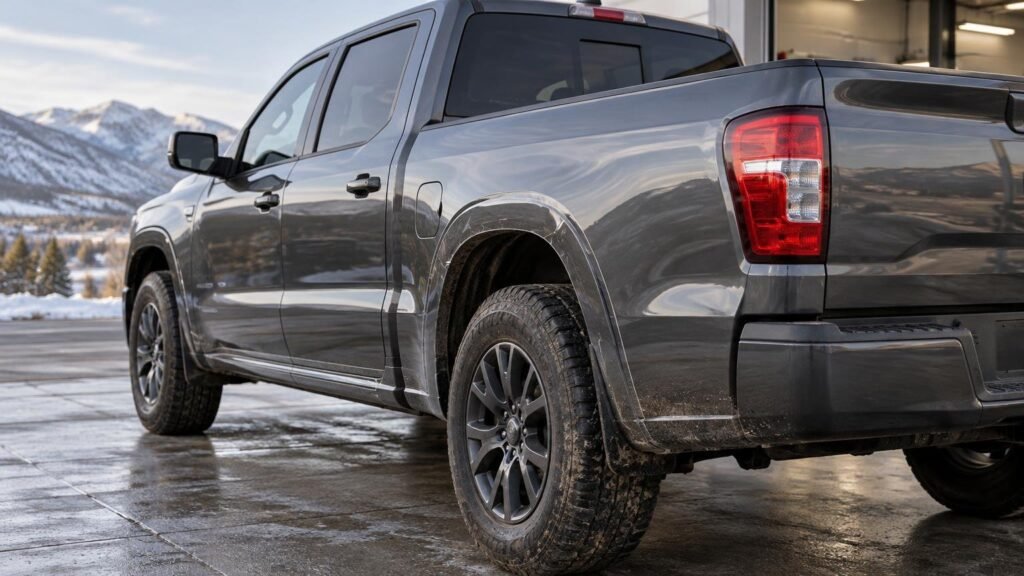
The most useful PPF package for a truck or SUV is often more targeted than full-body coverage but broader than a basic front package. Start with the bumper, hood, front fenders and mirrors, then consider rocker panels, lower doors, tire-adjacent fender areas and the tailgate or cargo ledge. Door cups and edges solve a different problem: repeated contact rather than road debris.
The right combination depends on tire fitment, mud flaps, body shape, road use, loading habits and how long you expect to keep the vehicle. A freeway-driven SUV, a work truck and an off-road vehicle can expose different panels even when they share a similar footprint.
Why front-end coverage may not be enough
Front PPF addresses the surfaces facing directly into traffic and road debris. A full-front package typically covers the complete bumper, hood, front fenders and mirrors, avoiding the partial-panel transition lines associated with some smaller packages. The choice between partial-front and full-front PPF should still be based on mileage, appearance expectations and budget.
Trucks and SUVs add another question: what happens after debris reaches the wheels? Treaded tires can pick up and eject stones toward exterior vehicle surfaces, according to a 2024 SAE study of stone lofting by tires. Where those stones land depends on tread, road material, speed, wheel offset, tire size, mud flaps and body geometry—not tire width alone.
That makes the front package a starting point rather than a complete answer for vehicles that regularly encounter gravel, construction zones, unpaved access roads or freshly treated pavement. UDOT’s chip-seal driving guidance specifically warns that vehicles can throw gravel into other lanes, illustrating why loose aggregate is a practical exposure rather than an abstract concern.
The high-impact areas worth inspecting
| Area | Primary exposure | When targeted PPF makes sense |
|---|---|---|
| Front bumper, hood, fenders and mirrors | Forward-facing road debris | Frequent freeway, canyon or highway driving |
| Rocker panels and lower doors | Tire-thrown debris, gravel and lower-body grime | Gravel roads, construction travel, winter use or limited factory cladding |
| Lower and rear fender areas | Debris leaving the tires | Aggressive fitment, exposed paint behind the wheels or repeated granular-road use |
| Tailgate and cargo ledge | Boots, bags, tools, pet claws and sliding cargo | Frequent loading, work use, camping, skiing or pet transport |
| Door cups and door edges | Fingernails, rings, keys and contact with nearby objects | Frequent passenger use, tight parking or long-term ownership |
| Full exterior | Mixed exposure plus a preference for uniform protection | High-value vehicles, demanding use or low tolerance for uncovered paint |
Rocker panels and lower doors
Rocker panels sit low and close to material leaving the front tires. On some trucks and SUVs, painted lower doors or flared bodywork also extend into the debris path. Factory cladding, running boards and mud flaps can change that path, so coverage should follow the actual vehicle rather than a generic template.
Inspect the paint behind each wheel and along the lower door line. Look for existing peppering, scratches or embedded contamination before applying film. PPF preserves the condition beneath it; it does not repair existing chips. If lower-body exposure is the main concern, targeted coverage can be more economical than wrapping complete doors. The deeper question of whether rocker-panel PPF fits Utah winter driving depends on route and use.
Fender flares and tire-adjacent paint
Wide tires deserve attention because they may alter where debris travels, especially when combined with wheel offset or limited mud-flap coverage. Width by itself does not prove that the paint will sustain more damage. The practical check is visual: stand behind each tire and identify which painted surfaces sit in a plausible debris path.
Depending on the vehicle, useful coverage may include the lower front doors, painted fender flares, the section immediately behind the rear wheels or a narrow strip along a bedside. Protecting only the exposed zone can preserve the benefit of PPF without paying to cover large upper panels that see little impact.
Tailgates and loading areas
A tailgate is not primarily a rock-chip zone. It is a working surface. Sliding a toolbox, ski bag, stroller or cooler across a painted edge can create repeated abrasion. Boots, belt buckles, pet claws and cargo hardware add localized contact.
Useful coverage might include the painted top of the tailgate, the outer loading lip, a cargo ledge or the area below a liftgate. 3M identifies trunk ledges among typical PPF locations, while Wasatch PPF includes luggage and loading areas in coverage planning. Choose the exact section according to how cargo crosses the vehicle, not simply according to what a precut package happens to include.
Door cups and door edges
Door cups and edges are small areas with a different exposure pattern. Film behind a handle helps isolate paint from fingernails, rings and keys. A narrow strip on a door edge helps with light contact in garages and parking spaces. Both locations are recognized as typical protection areas in 3M’s Series 150 product bulletin.
These pieces are inexpensive in protected area but require realistic expectations. Door-edge film cannot prevent dents, and cup film does not protect the rest of a door from carts or adjacent vehicles. They are targeted abrasion protection, not substitutes for careful use.
How Utah winter use changes the coverage map
UDOT says its winter operations can involve salt brine, salt, de-slicking grit, volcanic cinders and, in certain locations, potassium acetate. UDOT’s snow-removal overview provides current context for what may collect on wheel-adjacent and lower body panels during storms. Canyon and ski travel can also coincide with traction restrictions during severe conditions, increasing the importance of planning for winter routes and cleaning access rather than treating PPF as a seasonal cure-all.
For regular winter travel, full-front PPF plus selected rocker, lower-door and loading-area coverage is often a sensible middle ground. It puts film on the surfaces most likely to face forward debris, lower-body particulate exposure and repeated gear contact. Owners who transport skis, boots or roof-box cargo can refine that plan with the loading-area protection choices for ski trips.
Film does not protect the undercarriage, wheel wells, exposed metal hardware or every seam where residue can collect. Washing still matters. Review what PPF protects from Utah road salt and what still needs cleaning before assuming lower-panel film replaces winter maintenance.
Seams, edges and appearance on large panels
Large truck and SUV panels make coverage boundaries easier to notice. A partial strip across a door or bedside can leave a visible transition line, especially after dust accumulates along the edge. Rocker coverage is usually less conspicuous because the boundary can follow a body line, cladding edge or lower contour.
Ask where each film edge will sit before approving the package. Complete-panel coverage generally provides a cleaner visual result, but it also uses more material. Targeted pieces make sense where a natural body line hides the boundary or where the protected zone receives much more exposure than the rest of the panel.
Complex flares, textured trim, badges, sensors and tight recesses can also affect pattern design and edge placement. The useful goal is not to eliminate every visible edge. It is to place boundaries where they are visually quiet, serviceable and proportionate to the exposure.
A practical coverage order
When the budget does not support every panel, prioritize by exposure rather than vehicle size.
- Protect the front bumper, hood, front fenders and mirrors if the vehicle sees regular freeway or highway mileage.
- Add rocker panels, lower doors and tire-adjacent painted areas when gravel, construction, winter routes or unpaved travel create repeated lower-body exposure.
- Protect the tailgate, liftgate ledge or cargo sill if loading contact is already visible or expected.
- Add door cups and edges for frequent-use contact points, especially on family vehicles and long-term ownership.
- Consider full-body PPF when uniform coverage, appearance and broad risk reduction justify the added cost—not simply because the vehicle is large.
Choose coverage from the vehicle outward
Before selecting PPF for a truck or SUV, inspect the actual debris paths and contact points. Note where the tires sit relative to the body, whether running boards or mud flaps intercept material, which paint is already marked and where cargo crosses a painted edge. Then compare those observations with your freeway mileage, gravel use, winter travel and ownership horizon.
PPF reduces risk; it does not make paint invulnerable. A sufficiently hard strike can damage the film and the paint below it. The best plan protects the areas your vehicle actually puts in harm’s way while leaving low-exposure panels—and unnecessary cost—out of the package.