TLDR
Does removing PPF damage paint? Not automatically. Paint protection film is intended to be removable, and sound factory paint generally presents a more predictable starting point than repaired, peeling, oxidized, or otherwise unstable paint. Even so, no responsible installer can promise zero risk without assessing the vehicle. Film age, heat and UV exposure, panel repair history, adhesive condition, removal temperature, and technique can all affect the outcome.
The most important distinction is between adhesive residue and paint pull. Residue means adhesive remains on the surface after the film comes off; paint pull means part of the coating system separates from the panel. The former may be a cleanup problem. The latter can reveal weak adhesion within an existing paint or clear-coat system. Older film, unknown paint history, visible finish failure, or repainted panels justify a professional inspection before removal.
Does removing PPF damage paint? The conditional answer
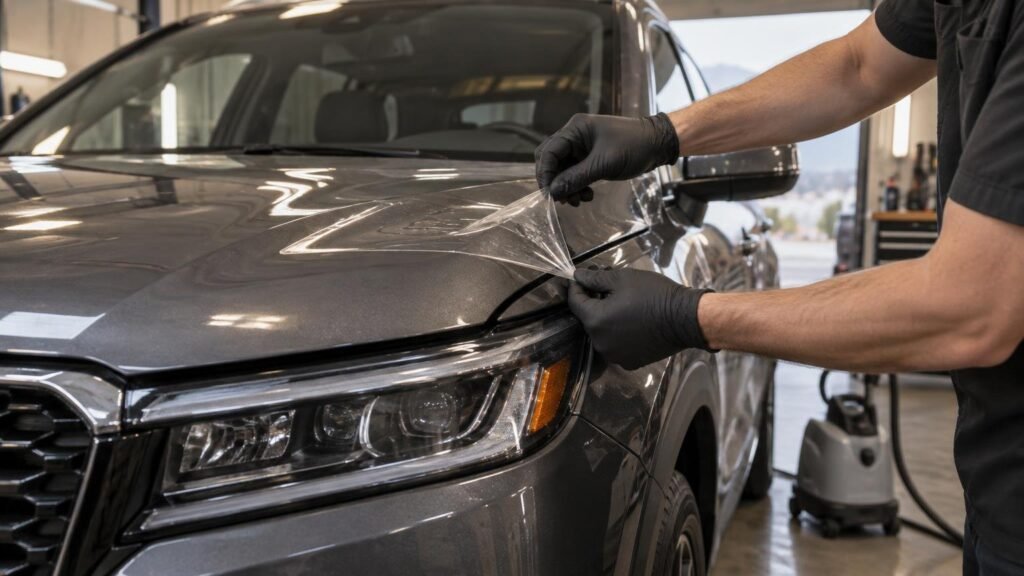
PPF removal should be treated as a condition-dependent process, not as a guaranteed damage-free event. XPEL recommends professional removal and provides technique guidance for keeping film pliable, while 3M notes that paint pull during removal is not covered by its limited warranty. Those positions reflect an important reality: a removable film cannot control the condition or adhesion of every painted surface beneath it.
On a panel with stable original paint, removal may be relatively straightforward. Risk becomes less predictable when a panel has been repaired, refinished, poorly prepared, improperly cured, oxidized, chipped, cracked, or affected by existing clear-coat failure. The film may come off cleanly in one area and resist removal near an old repair or damaged edge.
That is why the better question is not simply whether PPF can be removed. It is whether this particular film can be removed from this particular paint system with an acceptable level of risk.
Original factory paint versus repainted panels
Original factory paint is usually the more predictable removal surface when it remains intact, but “factory paint” is not a guarantee. Chips, corrosion, abrasion, prior polishing, environmental deterioration, or localized clear-coat failure can still create vulnerable areas.
Repainted panels introduce additional variables. The outcome can depend on how the old finish was prepared, whether incompatible materials were used, how well each coating layer bonded, and whether the refinish was fully cured before film installation. A high-quality repair may perform well; an unstable repair may not. The appearance of the panel alone does not always reveal the difference.
The official 3M removal instruction bulletin identifies repaired surfaces, aged paint, pre-existing damage, oxidation or chalking, and unstable or improperly cured paint as conditions that can make removal less predictable.
Owners should gather repair records if available. A used vehicle may have a repainted bumper, hood, fender, mirror cap, or rocker panel even if the seller did not mention it. Paint-depth readings and visual inspection can help identify inconsistencies, although neither can guarantee how strongly every coating layer is bonded.
Why old PPF can become more difficult to remove
There is no universal age at which every PPF installation becomes unsafe to remove. Products, climates, exposure, maintenance, panel orientation, and installation conditions vary too much for one deadline to apply to every vehicle.
Age still matters. Prolonged heat, UV exposure, and humidity can change how film and adhesive behave during removal. An older exposed film may become less flexible, separate in small pieces, resist a clean pull, or leave more residue. Horizontal panels such as hoods and roofs can have a different exposure history from shaded vertical panels on the same vehicle.
Visible yellowing, cracking, edge deterioration, bubbling, or a brittle surface does not prove that paint damage will occur. It does suggest that removal may require more time and tighter control. Waiting until deteriorated film is breaking into fragments can make the process more labor-intensive without providing any benefit to the underlying paint.
Adhesive residue is not the same as paint pull
These two outcomes should not be used interchangeably:
- Adhesive residue is material left on top of the paint after the film is removed. It may require a compatible adhesive remover and careful cleanup.
- Paint pull occurs when paint, clear coat, primer, or another part of the coating system separates from the panel during removal.
- Existing clear-coat failure may become more visible after the film is lifted, even when the film did not create the underlying failure.
- Film separation occurs when layers of aged film or adhesive split apart, making removal slower without necessarily damaging the paint.
XPEL’s care guidance acknowledges that adhesive remover may be needed after removal. An Infiniti service bulletin concerning temporary OEM transport film also directs technicians to inspect for residue and finish concerns after removal. That bulletin is not an aftermarket PPF procedure, but it supports the limited practical point that cleanup and post-removal inspection are separate steps.
Paint loss during removal also does not, by itself, prove that the film caused the original defect. Film can place stress on the surface as it is lifted, but the failure may occur within paint that was already poorly bonded, damaged, or deteriorating. Determining why a coating failed may require evaluation by a qualified collision-repair or refinishing professional.
Temperature and removal technique matter
Controlled warmth can help keep film pliable. Excessive heat, however, can create its own problems, and pulling cold, brittle film can make removal harder. LLumar recommends professional removal and says removal should not be performed in extreme cold; its FAQ specifies an indoor temperature of at least 55°F.
XPEL advises using steam when needed to keep film pliable and pulling the material at a shallow angle of less than 45 degrees. A low pulling angle directs force along the surface rather than sharply away from it.
These manufacturer instructions explain principles, not a universal do-it-yourself recipe. Temperature, equipment, adhesive response, panel material, edge condition, and film construction still have to be managed on the vehicle. Uncontrolled use of a heat gun, aggressive scraping, harsh solvents, or a fast upward pull can increase the chance of finish damage or turn manageable residue into a larger problem.
What if the clear coat is already peeling?
PPF removal cannot repair a failing coating system. If clear coat is lifting, flaking, blistering, or separating at an edge, film removal may expose more of that weakness. Leaving the film in place does not restore the bond between clear coat and the layers below it.
Warning signs deserve attention before any corner is lifted. Look for cloudy or milky areas, cracks that continue beyond the film, paint attached to an already lifted edge, peeling around rock chips, bubbles that appear to originate within the finish, or a sharp visual boundary around a prior repair.
When those signs are present, the useful next step may be a paint or body assessment rather than immediate film removal. The owner should understand that refinishing could be necessary regardless of who removes the film.
A practical pre-removal risk check
A qualified professional should assess the vehicle panel by panel. The following factors help frame the conversation:
| Condition | Why it matters | Practical response |
|---|---|---|
| Known original, stable paint | Provides a more predictable substrate, though it does not eliminate risk | Inspect chips, edges, clear coat, and film condition before removal |
| Known repaint or repaired panel | Coating preparation, curing, and layer adhesion may differ from factory paint | Review repair history and discuss paint-pull risk explicitly |
| Unknown vehicle history | Hidden repairs or spot refinishing may not be obvious | Consider paint-depth readings and closer inspection |
| Old, cracked, or brittle film | May resist removal, fragment, or leave more residue | Plan for controlled indoor removal and additional labor |
| Visible peeling or coating failure | The underlying finish may already be unstable | Seek paint or body evaluation before disturbing the film |
| Cold vehicle or workspace | Film may be less pliable and harder to control | Move the vehicle into an appropriate indoor environment |
Ask whether installer or product records are available, how old the film may be, whether any panels were repaired, and what the removal provider does when an unstable area is discovered. A small test area may provide useful information in some situations, but it cannot guarantee that every other panel or repaired section will behave the same way.
Written expectations matter as much as technique. Review any applicable film warranty, installer workmanship terms, and paint-pull policy before authorizing work. A film warranty may cover specified defects without covering the condition of the vehicle’s paint. For a broader explanation of these distinctions, see what PPF buyers should compare in a warranty.
PPF, vinyl wrap, color PPF, and ceramic coating are different
Removal advice should match the installed product. Clear PPF is primarily intended for physical impact and abrasion protection. Vinyl wrap is primarily an appearance or graphics product. Color PPF combines a visual change with PPF-style physical protection. Their constructions and adhesives are not automatically equivalent, so guidance for one material should not be assumed to apply to another.
Ceramic coating is different again. It changes surface behavior and may make cleaning easier, but it is not an impact-protection film. A coating beneath PPF should not be assumed to prevent paint pull, and it can affect installation adhesion if the surface was not prepared correctly. The usual sequencing considerations are explained in this guide to ceramic coating under PPF.
When professional inspection is the sensible choice
Professional assessment is especially prudent when the film is old or brittle, the vehicle’s repair history is unknown, a panel has been repainted, clear coat is visibly failing, or removal would occur in cold conditions. Matte finishes, color PPF, complicated panel edges, and vehicles with multiple paint repairs also deserve product-specific planning.
The goal of an inspection is not to promise a perfect result. It is to identify avoidable risks, choose an appropriate environment and technique, and establish what happens if the paint proves unstable.
The bottom line
PPF removal does not inherently ruin factory paint, but removability should never be treated as a guarantee. Sound original paint, flexible film, controlled warmth, and a shallow removal angle generally create a more favorable situation. Repainted panels, existing coating failure, aged film, cold temperatures, and unknown vehicle history make the result less predictable.
Before removing film, document the condition of every covered panel, gather installation and repair records, and have questionable areas inspected. That approach gives the owner a realistic risk assessment—and a better basis for deciding whether removal, replacement, cleanup, or paint repair should come next.