TLDR: Paint protection film can provide a physical barrier over the painted panels it covers, helping reduce direct exposure to winter grime, grit, and minor abrasion. It does not protect the undercarriage, exposed hardware, panel interiors, existing chips, or any paint left uncovered. The practical road salt PPF Utah strategy is to choose coverage around your driving exposure and continue washing the entire vehicle during winter.
For many Utah drivers, the decision is not simply whether to install PPF. It is where the film will materially help. A commuter using I-15 every day faces a different pattern of spray and debris than a low-mileage city driver. A truck visiting ski lots or gravel access roads may benefit from lower-body coverage that would add little value to a lightly used sedan.
What Utah roads may put on your vehicle
The visible white lines applied before some storms are often salt brine. During storms, the Utah Department of Transportation says its crews may also use regular white salt, high-performance salts, grit, volcanic cinders, and potassium acetate in certain locations and conditions. UDOT’s official snow-removal overview explains those materials and its approach to state and federal routes. It should not be read as a description of what every city or county applies to every local road.
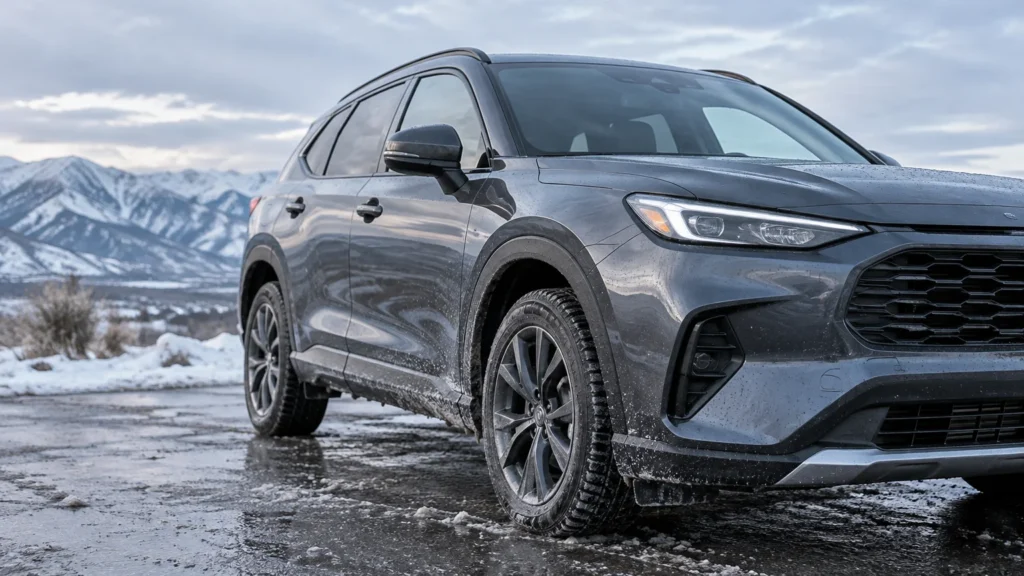
From a coverage perspective, the important detail is that winter driving creates two overlapping exposures. Wet road spray leaves residue on the vehicle, while grit and loose debris can strike forward-facing or lower painted surfaces. PPF addresses the second problem directly by placing a replaceable physical layer over selected paint. It can also isolate covered paint from some surface contamination, but the film itself still becomes dirty and needs care.
What PPF protects from road salt and winter debris
PPF protects only the surface beneath the installed film. On a full-front package, that commonly means forward-facing painted panels such as the bumper, hood, front fenders, and mirror caps, depending on the exact package. Targeted packages may instead concentrate on a smaller front area or add high-exposure zones such as rockers and lower doors. Wasatch PPF currently presents partial-front, full-front, targeted high-impact, and full-vehicle coverage as different options rather than treating maximum coverage as necessary for everyone.
On covered paint, the film becomes the first surface encountered by road spray, airborne grit, and light abrasion. That can be useful where repeated exposure would otherwise reach the clear coat directly. The benefit is still risk reduction, not invulnerability. A sufficiently hard impact can mark or puncture film, and damage can reach the paint underneath.
PPF also does not make winter residue harmless. Contamination can remain on top of the film, collect around trim, or reach adjacent uncovered areas. Leaving the vehicle dirty simply shifts some of the exposure from protected paint to the film surface and all of the other areas that PPF does not cover.
What PPF does not protect
PPF should not be described as whole-vehicle rust or corrosion prevention. Standard exterior coverage is applied to selected painted surfaces; it does not wrap the undercarriage or seal every seam, fastener, drain, wheel-well component, suspension part, or exposed metal edge.
- Undercarriage components and mounting hardware remain outside normal exterior PPF coverage.
- Wheel wells, brake components, suspension parts, and most exhaust components are not protected by film applied to body paint.
- Residue can reach gaps, seams, panel backs, and trim even when the visible face of a panel is covered.
- Uncovered paint remains directly exposed to road spray and debris.
- Existing chips, peeling clear coat, or corrosion are not repaired by installing film over the area.
This distinction matters when evaluating value. Full-body PPF can expand protection across visible painted panels, but it still is not an underbody treatment or a sealed shell. Winter washing remains relevant regardless of how much exterior paint is wrapped.
Choosing road salt PPF coverage for Utah driving
Start with route, mileage, vehicle shape, and ownership plans. Then compare the panels receiving regular exposure with the areas included in the proposed package. Package names are not enough; request an exact panel list and discuss where film edges or seams will appear.
| Driving pattern | Coverage worth considering | Main limitation |
|---|---|---|
| Occasional winter city driving | Partial-front or targeted high-impact coverage | Lower doors and rearward panels may remain uncovered |
| Frequent freeway or canyon travel | Full front, with lower-body areas evaluated separately | Full-front coverage does not normally protect the entire side of the vehicle |
| Truck or SUV with exposed lower sides | Full front plus rocker or lower-door coverage where geometry warrants it | Film does not extend protection to the undercarriage or wheel-well hardware |
| Frequent ski travel with cargo loading | Front and lower-panel coverage, plus evaluation of the rear loading area | Coverage needs depend on how passengers and equipment use the vehicle |
| Appearance-focused long-term ownership | Full-body coverage may provide the most consistent visible-film coverage | Higher cost and more protected area do not eliminate washing or impact risk |
Full front is a strong starting point, not a complete winter package
Full-front PPF is often logical for vehicles that accumulate freeway or canyon mileage because it concentrates film on forward-facing painted panels. It can also avoid the visible hood seam associated with some partial-front layouts. But road spray does not stop at the front fenders. Lower doors, rocker panels, and areas behind the wheels may still collect contamination and receive debris.
For a low-mileage vehicle, that tradeoff may be acceptable. For a high-mileage commuter, the next dollar may be better spent on exposed lower panels rather than extending film to relatively sheltered upper surfaces. The Wasatch PPF coverage overview provides the starting package categories, but the useful comparison is the actual panel map for the specific vehicle.
Rockers and lower doors deserve a separate decision
Rocker panels sit low enough to receive spray and debris thrown by the tires. Vehicle geometry changes the exposure: wide tires, flared bodywork, running boards, mud flaps, and the shape of the lower door can redirect what reaches the paint. Trucks, SUVs, and some performance vehicles may therefore need a different lower-body plan than a narrow commuter car.
The narrower guide to rocker-panel PPF for Utah winter driving explains how to evaluate that zone without assuming every vehicle needs it. Drivers making regular resort trips can also use the Utah ski-trip PPF coverage guide to consider lower panels, door sills, and the rear loading area alongside front protection.
Winter washing still matters with PPF
Wash care should have two goals: remove accumulated contamination and avoid damaging film edges. There is no responsible universal wash schedule for every Utah driver. A vehicle driven through wet treated roads may need attention sooner than one that stayed parked through the storm. Route frequency, storage, temperature, wash access, and the installed product’s instructions all change the practical timing.
Use the current care guidance for the exact film installed. For example, XPEL’s product-care instructions tell owners to follow product-specific practices, address insect stains promptly, and avoid pressure washing close to film edges. That is useful as an example of why edge care matters, but it should not be presented as proof that Wasatch PPF installs XPEL or that every manufacturer gives identical instructions.
- Ask for the installed film’s current manufacturer care instructions and any installer-specific post-install guidance.
- Remove winter residue from the whole vehicle, including uncovered panels and accessible lower areas—not only the film.
- If using pressurized water, keep concentrated spray away from film edges and follow the applicable product instructions.
- Use wash chemicals and tools compatible with the installed film rather than assuming every degreaser or automated wash is appropriate.
- Inspect edges periodically for lifting, trapped contamination, or damage instead of picking at an edge or attempting a home repair.
Automatic washes cannot be labeled universally safe or unsafe without knowing the wash design, chemical system, film condition, and manufacturer guidance. Touchless equipment avoids rotating brushes but may use strong chemicals or high-pressure jets. Brush washes introduce physical contact. When uncertain, use a film-compatible hand-wash method or ask the installer and film manufacturer about the specific wash process.
PPF, ceramic coating, and vinyl wrap solve different problems
Ceramic coating is primarily about surface behavior and easier cleaning. It may make some contamination easier to remove, depending on the product and condition, but it is not a substitute for the physical impact layer provided by PPF. Coating and PPF can be complementary when their products and installation sequence are compatible.
Vinyl wrap is primarily an appearance and graphics material. It can cover paint, but it should not automatically be assigned the same impact-protection role as PPF. Color PPF is a separate category that combines a color or finish change with PPF-style physical protection. Product-specific construction, care, and warranty terms still need verification before comparing options.
Inspect the paint before choosing coverage
PPF preserves the condition beneath it; it does not reverse existing damage. Before installation, inspect the bumper, hood, fender edges, rockers, lower doors, wheel arches, and loading areas in good light. Identify chips, scratches, peeling clear coat, previous repairs, and any suspected corrosion.
That inspection helps separate three decisions: what should be corrected first, what can responsibly receive film, and which panels are worth protecting going forward. It also sets realistic expectations. A pre-existing chip remains a pre-existing chip even if the area is later covered, while unstable paint or corrosion may require evaluation before film is considered.
The practical Utah winter plan
For many daily drivers, full-front PPF plus selective lower-body coverage is a more rational winter plan than automatically choosing full-body film. A lightly used vehicle may need less. A high-mileage truck with exposed rocker panels may need more protection below the doors even if upper side panels receive little road debris.
Map your usual routes, winter mileage, tire spray pattern, cargo use, paint condition, ownership horizon, and tolerance for visible seams. Then compare those factors with an exact panel-by-panel proposal. Whichever package you choose, continue cleaning the entire vehicle after meaningful winter exposure. PPF can protect covered paint; it cannot turn road salt, slush, and grit into a maintenance-free problem.